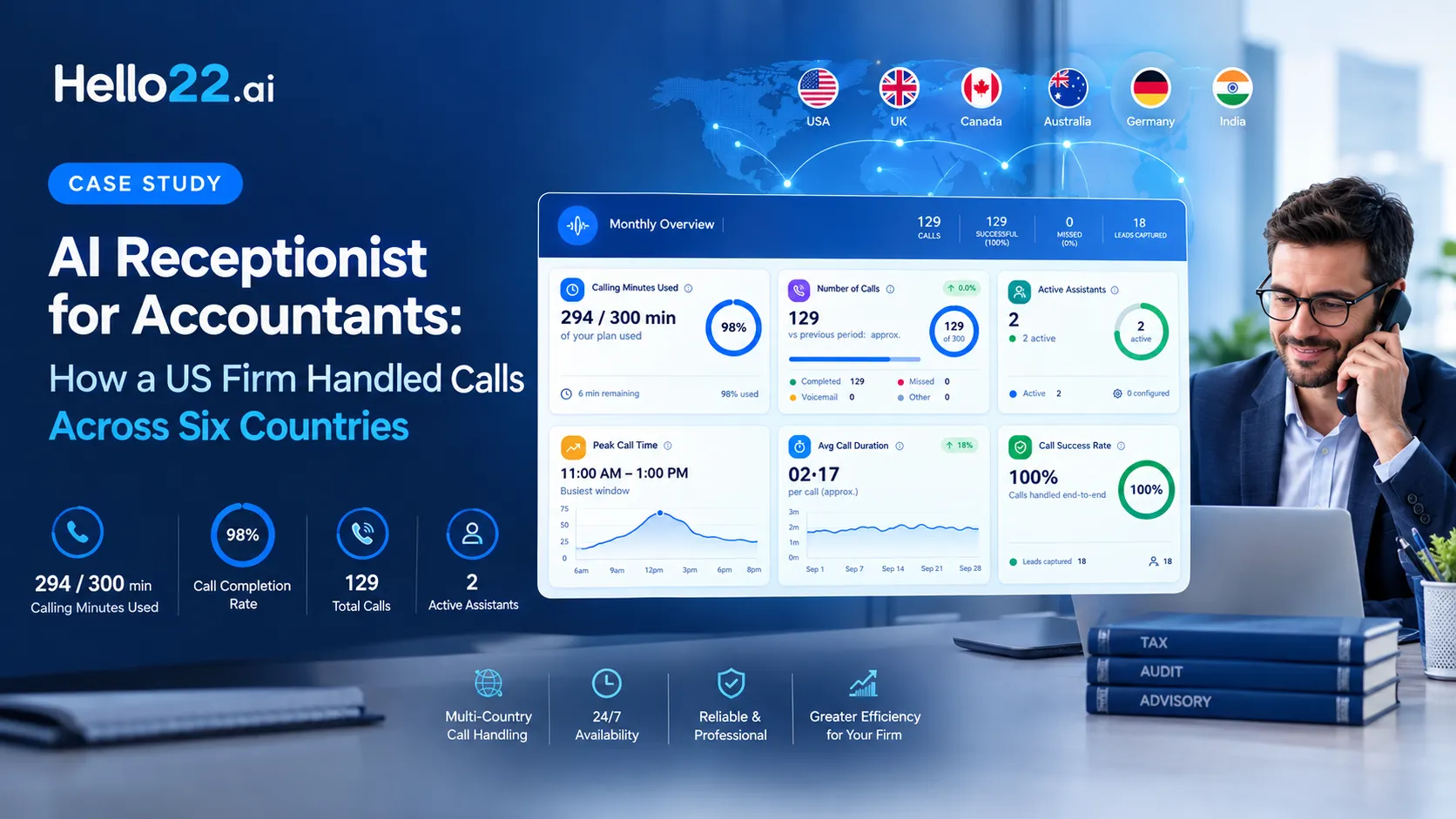

Typical small-business call volumes are roughly 150 to 300 minutes a month; expect to pay somewhere between $500 and $1000 a month for a live human service, or $300 to $500 a month for a flat-rate AI plan. But the number on a pricing page is rarely the number on the actual invoice once setup fees, overage charges, and add-ons get counted.
A café owner signs up for a virtual receptionist advertised and feels good about the decision until the second month’s invoice arrives higher than expected, because a busier month pushed call minutes past the plan’s allowance and nobody mentioned the overage rate during the sales call. Nothing about that was dishonest exactly, just incomplete, and it’s an extremely common story across this entire category.
This guide picks up where the general cost overview in this series leaves off: exactly what’s typically included in a base plan, what commonly costs extra, real worked numbers at specific call volumes, and a practical way to compare two quotes that are structured completely differently from each other.
📌 Key Takeaways: What You’ll Actually Pay
- At 150–300 minutes a month, live human services typically land between $500–$1000/month; flat-rate AI plans typically land between $300–$500/month.
- Overage minutes are the most common source of invoice surprises. Confirm the per-minute overage rate before signing, not after the first bill.
- Setup fees range from $0 to several hundred dollars depending on the provider and complexity, and are worth asking about explicitly.
- Add-ons like multilingual support, SMS confirmations, premium voices, and custom CRM integration often push the advertised entry price higher.
- Comparing a per-minute quote to a flat-rate quote only works if you convert both to the same unit cost per minute at your actual expected volume.
- Month-to-month terms carry less risk than annual contracts while you’re still confirming a provider is the right fit.
What’s Actually Included in a Base Plan
Across both live human and AI receptionist plans, a typical base/entry tier generally includes:
- A set number of included call minutes or calls per month
- Basic call answering with a greeting using your business name
- Message-taking and call summaries delivered by email or a similar channel
- Basic appointment booking, where a calendar is connected
What counts as a “basic” appointment booking varies a lot. Some entry plans genuinely book into a live calendar; others just take down a request for someone to confirm manually. It’s worth confirming which one you’re getting rather than assuming. Read – How Does a Virtual Receptionist Work?
What Commonly Costs Extra
These are the line items that most often turn up on an invoice but not on the headline pricing:
- Overage minutes or calls. Once you exceed your plan’s included volume, expect per-minute or per-call charges on top, commonly $1.50–$3.00 per extra minute on live services, and often a similar or somewhat lower per-minute rate on AI plans.
- Setup or onboarding fees. Particularly on live human services with more involved script-writing and agent training.
- Multilingual support. Often a paid upgrade rather than included in the base tier.
- Premium voices (AI) or specific agent requests (live). Some AI providers gate more natural-sounding voice options behind a higher tier. Compare virtual receptionist plans
- SMS call summaries or confirmations. Some providers bundle this in; others charge it as an add-on.
- Custom CRM integration. Beyond a default supported CRM, custom integrations can carry an extra setup or monthly cost.
- After-hours or weekend coverage. Common surcharge on live services; typically included at no extra cost on AI plans.
- Additional users, departments, or call-routing rules. More complex routing setups sometimes bump you into a higher tier.
None of these are unreasonable charges on their own; the issue is when they’re not disclosed until after signup. Ask about every item on this list before committing to a plan. Know – How Much Does a Virtual Receptionist Cost
Setup Fees and Onboarding Costs to Expect
Setup costs vary significantly by provider and service type:
- AI receptionist platforms often charge no setup fee or a modest one-time fee, since onboarding largely means providing business information through a guided process.
- Live human services more often charge a setup fee, particularly for detailed script-writing, agent training, and more complex call-routing rules. This can range from nothing to several hundred dollars depending on complexity. Explore virtual receptionists in Australia
If a quote doesn’t mention a setup fee at all, ask directly rather than assuming there isn’t one.
Contract Terms Worth Reading Closely
Before signing anything, check specifically for:
- Contract length. Month-to-month vs. annual, and whether an annual term comes with a meaningful discount that’s actually worth the reduced flexibility.
- Auto-renewal terms. Whether the contract renews automatically and how much notice you need to give to cancel.
- Early-termination fees. What it costs to leave before the contract term ends.
- Price-change clauses. Whether the provider can raise your rate at renewal, and by how much, without renegotiation. Explore our virtual receptionist guides

How to Compare Quotes That Use Different Pricing Structures
Comparing a per-minute quote to a flat-rate quote directly is comparing two different units. The fix is converting both to the same one: Read – How to Choose a Virtual Receptionist Service
- Estimate your realistic monthly call minutes, based on recent history if you have it, or a conservative estimate if you don’t.
- Calculate the live per-minute quote’s total cost at that volume (rate × minutes, plus any per-call fees).
- Calculate the AI flat-rate quote’s total cost at that volume, including any likely overage if you’ll exceed the included minutes.
- Add setup fees, amortized over the contract length if there’s a fee, to get a fairer first-year comparison.
- Compare the two totals at your actual volume, not at the advertised “starting at” figure, which is usually calculated at the lowest possible usage.
Where Hello22 AI Fits
Hello22 AI runs flat monthly pricing with no setup fee and no lock-in contract. There’s no separate charge for after-hours or weekend coverage. You can see exactly what a plan would cost against your own real call volume during the 7-day free trial credit card required, before comparing it against any other quote using the worksheet above.
Final Thoughts
The advertised price you can ask on the Demo page and you can ask starting point, not the number you’ll actually pay. Overage rates, setup fees, and add-ons are where the real cost usually lives, and they’re rarely disclosed until you ask directly. Run the worked comparison at your own realistic call volume rather than trusting a “starting at” figure calculated at the lowest possible usage, and use the worksheet above to compare quotes on equal terms rather than by gut feeling.
For the broader pricing landscape and human-vs-AI cost comparison this article builds on, see “How Much Does a Virtual Receptionist Cost?” earlier in this series. Figures in this guide reflect published industry pricing ranges and Hello22 AI’s plans as of August 2026; confirm current numbers directly with any provider before budgeting.
❓ Frequently Asked Questions About Virtual Receptionist Pricing FAQs
Why didn’t my invoice match the quoted price?
The most common reason is that exceeding your plan’s included call minutes triggers a per-minute charge that often isn’t emphasized during the sales conversation. Always confirm the overage rate before signing up.
What counts as an “overage” minute or call?
Any minute or call beyond what’s included in your plan’s base allowance. Live human services and AI receptionists both typically charge a per-minute or per-call rate once you exceed the included volume.
Do AI receptionists charge setup fees?
Often not, or only a modest one-time fee, since onboarding usually means providing business information through a guided setup process rather than custom development or agent training.
Is a contract required for a virtual receptionist service?
Not always. Many AI receptionist providers offer month-to-month plans with no lock-in, while some live human services still favor annual contracts, sometimes with a discount attached. Ask directly if flexibility matters to you.
How do I fairly compare a per-minute quote to a flat-rate quote?
Convert both to a total cost at your realistic monthly call volume, including any likely overage on the flat-rate side, rather than comparing the headline “starting at” numbers directly.
What’s the biggest hidden cost people miss when budgeting for a virtual receptionist?
Overage charges during genuinely busy months, exactly when the service matters most and when the bill is most likely to increase.
Should I choose the cheapest plan available?
Not necessarily. The cheapest plan’s minutes allowance may not cover your call volume, and enough overage charges could make it more expensive than a higher-tier plan would have been. Run the numbers at your actual volume before deciding.