A virtual receptionist is an AI or remote service that answers business calls and handles common receptionist tasks without being at the front desk. It can answer customer questions, book appointments, reschedule or cancel bookings, send reminders, and route calls when needed.
A virtual receptionist can be a real person working remotely, an AI voice agent, or a simple call-routing system. Today, all three are commonly called “virtual receptionists.”
Picture a dental clinic at 11 a.m. Two patients are checking in, the hygienist needs a signature, and the phone starts ringing. Nobody at the front desk is free to answer it. That caller either waits on hold, hits voicemail, or hangs up and tries the practice down the road. A 2024 study of small businesses across 58 industries found only about 38% of calls were answered live during business hours, and most callers who reach voicemail never leave a message — the cost of a missed call adds up faster than most owners realise. A virtual receptionist exists to close that gap.
This guide explains what a virtual receptionist actually is, the different forms it comes in, who typically uses one, and when it’s worth considering for your business. Later guides in this series go deeper into how the technology works, what it costs, and how to choose a provider. This one is the plain-English starting point.
📌 Key Takeaways: Virtual Receptionist, Explained in 60 Seconds
- A virtual receptionist answers calls and handles basic reception tasks from outside your physical office.
- The term covers three different things: a live remote person, an AI voice agent, or an automated call-routing system, depending on which one you’re being sold.
- Typical tasks include answering calls, taking messages, booking appointments, and forwarding urgent calls to the right person.
- Small businesses answer roughly 38% of their calls live, according to a widely cited 2024 industry study; the rest go to voicemail or nowhere.
- A virtual receptionist isn’t only for large companies; solo tradespeople and small clinics use them just as often as call centers do.
- It’s not a total replacement for judgment-heavy, sensitive calls that often still need a human in the loop.
Virtual Receptionist Meaning: 3 Different Services Hiding Behind One Name
Search for a virtual receptionist, and you’ll get three genuinely different products described with the same term:
A live remote receptionist. A real person, employed by an answering service, who works from a call centre or their own home and answers on behalf of your business using a script you’ve provided. You’re usually billed per minute or per call.
AI receptionist Software that holds a spoken conversation with the caller, understands what they’re asking for, and responds by answering FAQs, booking appointments, and taking messages without a human on the line, though most services can still transfer to a person when needed. How this compares to a live human receptionist is worth understanding before you choose either.
An auto-attendant. The “press 1 for sales, press 2 for support” system, or a basic voice menu. It routes calls; it doesn’t hold a conversation or answer questions. The core difference between an auto-attendant and an AI receptionist is routing versus actually resolving the call.
If a vendor says “virtual receptionist” without specifying which of these it is, ask. It changes the price, the sound, and what the service can actually do.
Virtual Receptionist vs. Receptionist vs. AI Receptionist vs. Auto-Attendant
| Term | Who or what answers | Where they work | Typical pricing |
| In-house receptionist | A person you employ | Your office | Salary + benefits |
| Live virtual receptionist | A person employed by a third-party service | Remote call centre | Per minute or per call |
| AI receptionist | Software / AI voice agent | Cloud-based, works 24/7 | Flat monthly plan, often with a minutes allowance |
| Auto-attendant | Pre-recorded menu, no conversation | Your phone system | Usually bundled into VoIP plans |
| Virtual assistant | A person handling admin/executive tasks (not primarily calls) | Remote | Hourly or per project |
The U.S. Bureau of Labor Statistics puts the average annual wage for an in-house receptionist at around $37,230 ($17.90 per hour) before benefits, software, and the cost of covering sick days or after-hours gaps, a useful anchor when you’re comparing the true cost of each option. Learn more about how AI Receptionists Work
Who Uses a Virtual Receptionist? Real Examples by Industry
You don’t need a call centre’s call volume to benefit from one. In practice:
- A small law firm uses one so a new client inquiry at 6 p.m. doesn’t wait until 9 a.m. the next day, by which time the caller has probably already rung a competing firm. After-hours calls matter more than most businesses assume.
- A real estate agent showing houses all afternoon uses one to make sure a buyer asking about an open house gets an answer instead of voicemail.
- A dental or medical clinic uses one during peak hours, when the front desk is juggling check-ins and can’t get to every ring.
- A solo tradesperson, an electrician or a locksmith, uses one because they’re physically unable to answer while working, and a missed call is a missed job.
The common thread isn’t company size. It’s that the phone rings at moments when nobody is free to pick it up.

What Does a Virtual Receptionist Do? A Quick Overview
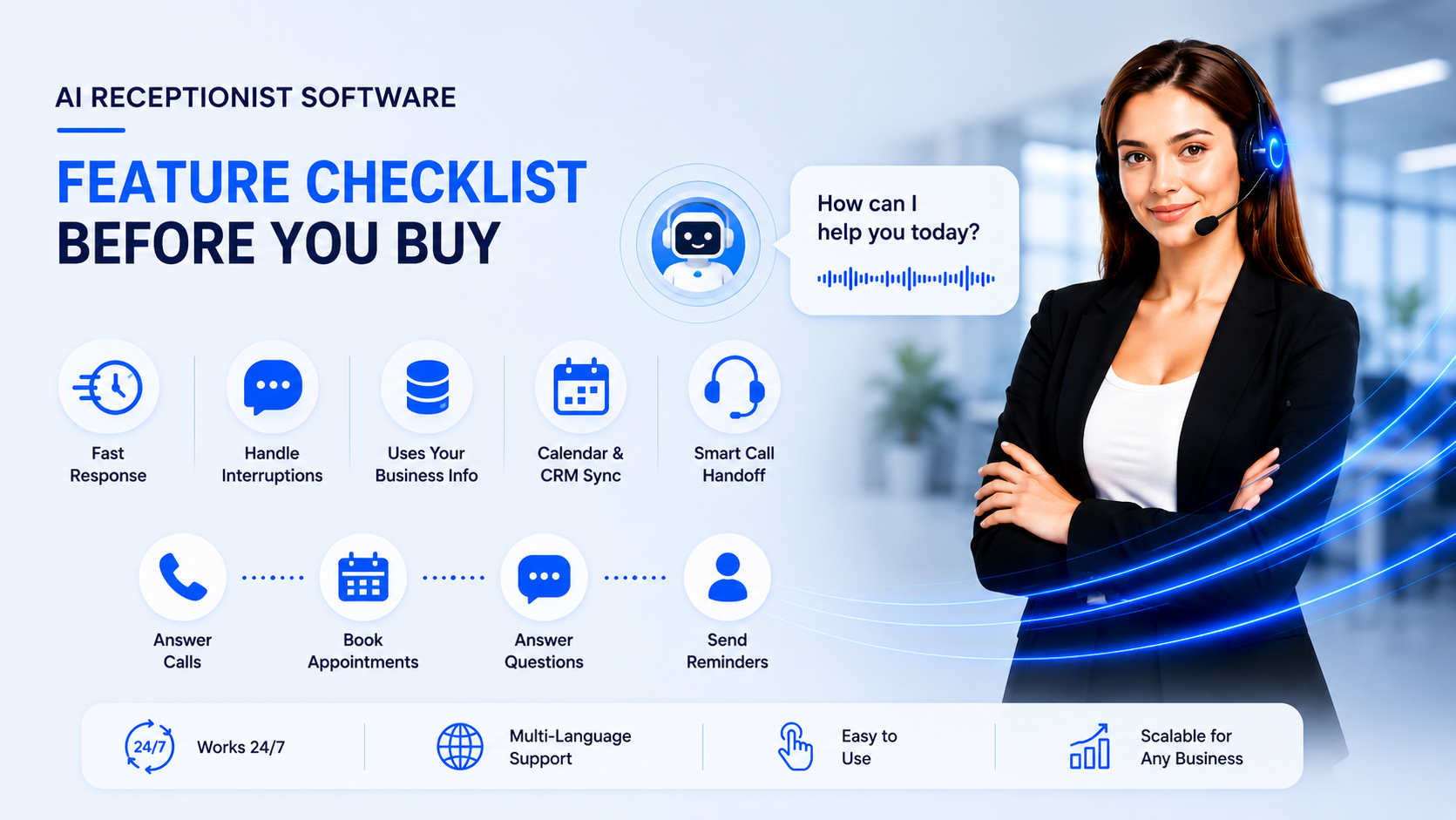
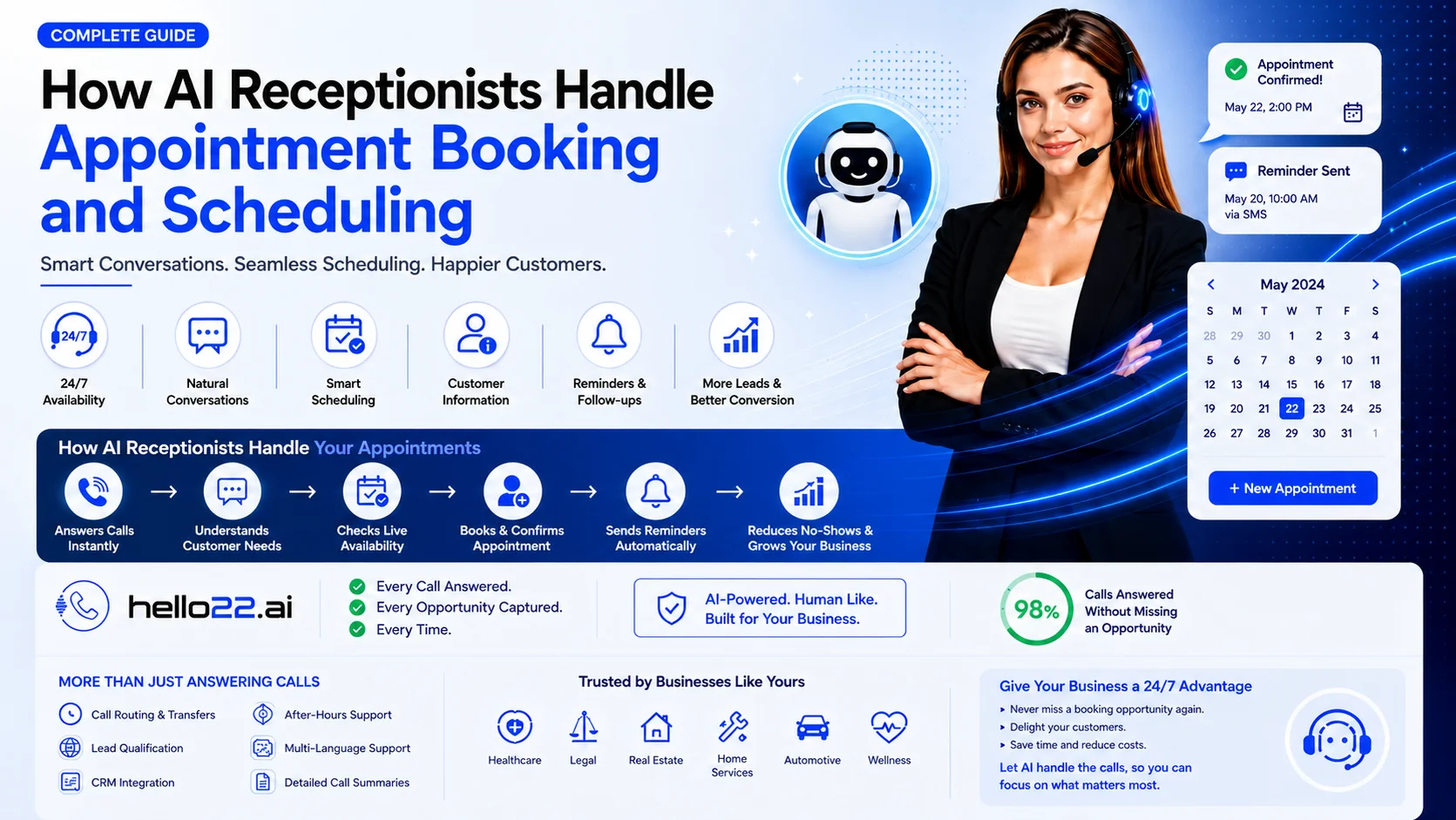
At a high level, most virtual receptionist services, human or AI, cover some combination of:
- Answering calls in your business’s name
- Answering common questions (hours, location, pricing, services)
- Taking messages
- Booking, and sometimes rescheduling, appointments
- Forwarding urgent or complex calls to a real staff member
- Sending a summary of the call afterward, by SMS, email, or a tool like WhatsApp
Exactly how each of these plays out day to day, what a full call actually sounds like, how information gets logged, and how follow-ups happen is its own topic; see “What Does a Virtual Receptionist Do?” for the detailed breakdown.
Benefits of a Virtual Receptionist
- Fewer missed calls. Someone (or something) is there to answer even during your busiest hour.
- After-hours coverage. Calls outside 9-to-5 don’t automatically go to voicemail.
- Lower fixed cost than hiring. No salary, benefits, or training overhead is particularly relevant for AI-based services billed as a flat monthly plan.
- Consistency. The same greeting and information every time, regardless of who’s on shift or how busy the office is.
- Scalability. Call volume can spike (a marketing campaign, a seasonal rush) without needing to hire temporary staff.
For a fuller breakdown, see the full list of AI receptionist benefits for small businesses.
Limitations of a Virtual Receptionist: What It Won’t Do
A virtual receptionist isn’t the right fit for every call, and it’s worth being upfront about where it falls short:
- Sensitive, judgment-heavy calls — a distressed patient, a legal emergency, a complex complaint — often still need a human who can read tone and context, whether that’s a live agent or a fast handoff from AI to staff.
- Setup matters. An AI receptionist is only as accurate as the information and scripts it’s trained on; a rushed setup can produce vague or incorrect answers.
- It won’t greet walk-in visitors or replace a physical front desk if your business relies on in-person reception.
- Heavy accents or very poor phone lines can still trip up AI speech recognition, though this has improved significantly in the past few years.
- Live human services cost more at volume; per-minute pricing adds up quickly for high call volumes, which is part of why AI options have grown popular for businesses with heavier call traffic.
Do You Need a Virtual Receptionist? 5 Signs It’s Time
A virtual receptionist is worth looking into if any of these sound familiar:
- You regularly miss calls during business hours, not just after hours.
- Voicemail messages go unreturned for hours, or callers don’t leave one at all.
- You or your staff are physically unable to answer while doing the core job (on a job site, with a patient, mid-show).
- You want after-hours or weekend coverage without hiring night staff.
- You’re spending money on marketing or ads, but leads are slipping through because nobody answers the phone.
If your call volume is very low and personal, face-to-face relationships are central to how you do business, an in-house or no receptionist at all may still make more sense. A virtual receptionist adds the most value when the phone is a genuine bottleneck.
Where Hello22 AI Fits
Hello22 AI is an AI receptionist, one of the three categories described above, not a live call centre service. It answers calls in your business’s name using the same call-answering process common to modern AI voice agents, handles routine questions using information you provide, books appointments into your calendar, and sends a summary of each call by WhatsApp, email, or SMS. Complex or sensitive calls can be transferred to your team. Plans start with a 7-day free trial with credit card required, so it’s possible to test how it handles your real call volume before committing to anything.
Final Thoughts
“Virtual receptionist” isn’t one product; it’s an umbrella term covering a live remote person, an AI voice agent, and basic call-routing software, each with different pricing and capabilities. The businesses that get the most value from one are those where calls are genuinely being missed: during busy hours, after closing, or whenever nobody’s free to pick up.
Before you shop for a provider, get clear on which type you actually need, then use the checklist above to sense-check whether your business would benefit at all. The next guide in this series, How Does a Virtual Receptionist Work?, walks through exactly how a call moves through the system from ring to resolution. Pricing figures and trial terms referenced here reflect Hello22 AI’s plans as published in August 2026. Always confirm current details on the provider’s own pricing page.
❓ Frequently Asked Questions about Virtual Receptionist
Is a virtual receptionist a real person?
It depends on the service. Some are live people working remotely for an answering service; others are AI voice agents; some are just automated call menus. All three get marketed under the same term, so it’s worth asking directly which one you’re evaluating.
What’s the difference between a virtual receptionist and an auto-attendant?
An auto-attendant is a menu system, “press 1 for sales,” with no conversation. A virtual receptionist, whether human or AI, actually answers questions and takes action, like booking an appointment, rather than just routing the call somewhere.
Is a virtual receptionist the same as an AI receptionist?
Not exactly. AI receptionists are one specific type of virtual receptionist. The term “virtual receptionist” is broader and also includes live remote humans and basic call-routing systems.
How is a virtual receptionist different from a virtual assistant?
A virtual receptionist focuses specifically on incoming calls and reception tasks. A virtual assistant typically handles broader administrative or executive support, email, scheduling, research, and may not be call-focused at all.
Does a small business actually need a virtual receptionist?
Not always. It’s most useful when calls are genuinely going unanswered during peak hours, after hours, or because staff are physically tied up doing the core job. A business with very low call volume may not see enough value to justify it.
Can a virtual receptionist work with my existing business phone number?
Most services, including AI receptionists like Hello22 AI, can work with your existing number through call forwarding, though setups vary by provider and country, so it’s worth confirming with whichever service you choose.
Will callers know they’re talking to an AI receptionist?
With modern AI voice agents, many callers won’t notice immediately, since the systems use natural-sounding voices and can hold real conversations. Good providers are upfront that AI is involved if asked directly, and complex calls are handed off to a human.